
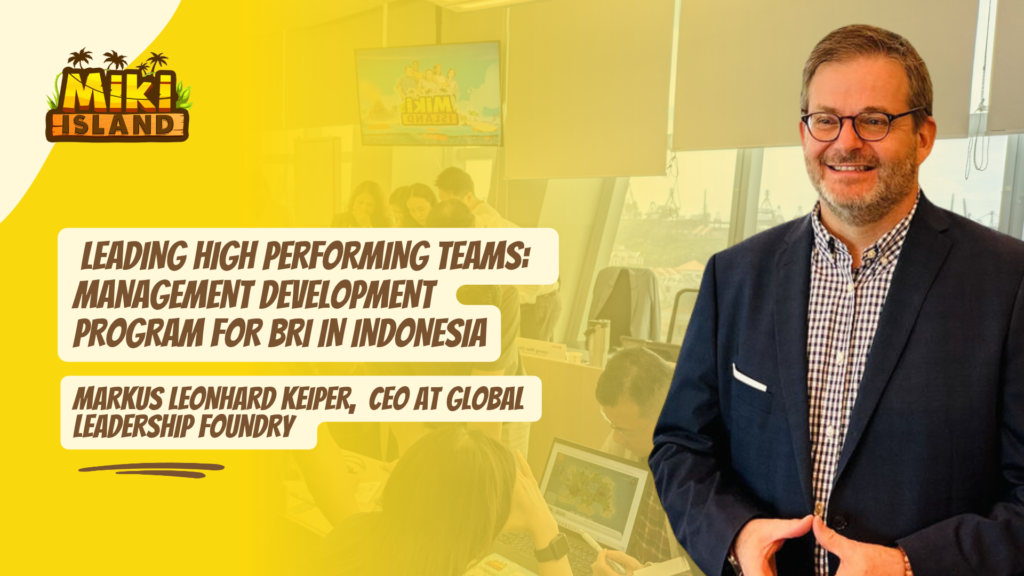
Leading High Performing Teams: Markus Keiper’s Management Development Program for BRI in Indonesia
Key Takeaways
- BRI (Bank Rakyat Indonesia, Persero) brought more than 25 senior leaders together for a management development program on Leading High Performing Teams.
- Miki Island sees high performance as an engine of effective teams, effective leaders and effective team members, powered by a clear strategy and a strong culture, and built on research from GDQ Associates.
- Its work focuses on the behaviours of high performing teams: shared ownership, collective intelligence, healthy challenge, clarity and alignment, and fast learning loops.
- Markus Keiper, a Miki Island partner, delivered the program in collaboration with the National University of Singapore.
A Program Built for Senior Leaders 🌱
Leading a high performing team is a big subject, and BRI (Bank Rakyat Indonesia, Persero) gave it room. More than 25 senior leaders in Indonesia came together for a management development program built around it.
Markus Keiper, a Miki Island partner, delivered the program in collaboration with the National University of Singapore.
What It Takes to Lead a High Performing Team 🎯
Miki Island thinks of high performance as an engine.
It has three parts: effective teams, effective leaders and effective team members. A clear strategy and a strong culture give that engine its power.
Each part has its own story, and Miki Island’s research looks at all of them:
👤 Effective leaders. How effective team leaders behave.
🙋 Effective team members. How effective team members behave.
👥 Effective teams. How teams grow through stages of maturity, and what high performing teams have in common.
🏛️ Strategy and culture. The building blocks of a high performance culture.


Behaviours in Focus 💡
Ideas about teamwork are easy to agree with. Behaviour is harder to see, and that is where Miki Island puts its attention.
Under pressure, habits show: how a team shares information, who takes ownership, how decisions get made.
Miki Island’s research describes how teams behave as they mature, and the work is about practising those behaviours:
🤝 Shared ownership
🧠 Collective intelligence
📣 Healthy challenge
🎯 Clarity and alignment
⚡ Fast learning loops
A coach guides the reflection with plain questions.
What just happened?
Where did the team fall back on silos?
Who took ownership, and who waited?
This describes how Miki Island works in general. What BRI’s leaders saw in themselves is theirs to tell.
Where the Thinking Comes From 🔬
This is Miki Island’s general way of seeing high performance.
The thinking is built on behavioural science and on research from GDQ Associates, the institute founded by Dr. Susan Wheelan, who devoted about 30 years to studying how teams develop and perform.
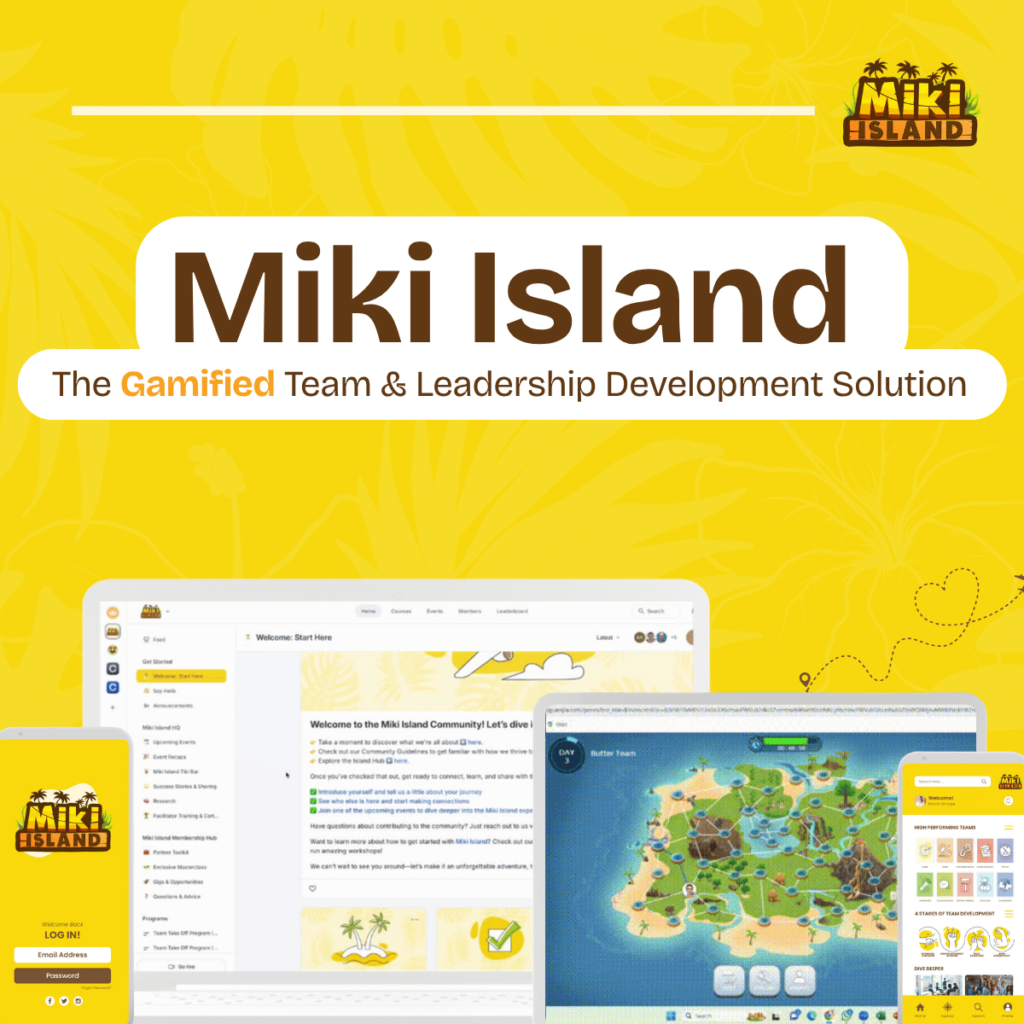
Miki Island’s platform brings it together through simulation, assessment, AI and analytics, micro-learning and coach-led facilitation.
Leading the Whole Engine 💛
High performance comes from more than one place.
It takes the team, its leader and every member, with a clear strategy and a strong culture behind them, and it shows in behaviour: how a team owns its results, thinks together and learns fast.
That is the picture Miki Island brings to leaders, and BRI put the subject at the centre of its program, with Markus Keiper and the National University of Singapore.
Conclusion
- Leading a high performing team starts with seeing it clearly: who owns the work, how the group thinks together, how it handles disagreement, and how quickly it learns. Miki Island helps leaders look at exactly these things. BRI made them the subject of its program for senior leaders, delivered by Markus Keiper with the National University of Singapore.
