
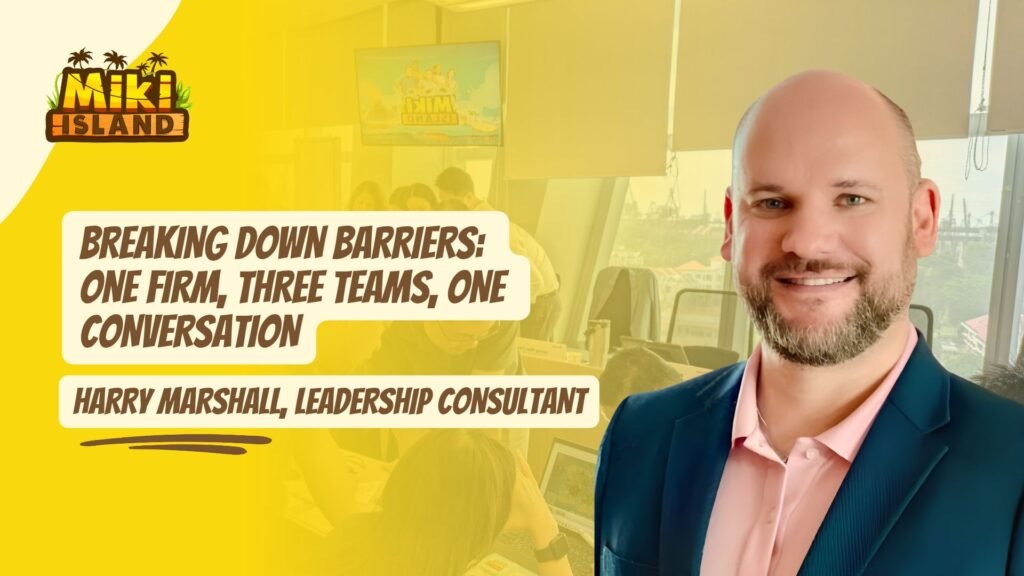
Breaking Down Barriers: One Firm, Three Teams, One Conversation
Key Takeaways
- A Trust, Tax & Accounting firm used Miki Island to break down silos between three business lines that frequently serve the same clients.
- Participants played in mixed groups and experienced first-hand how a shared goal can hold a team together under pressure.
- The second part of the session moved into psychological safety, trust and live dialogue practice using the C4 Dialogue Navigator®.
- Facilitated in Singapore by Harry Marshall of Dramatic Difference, the session marked the first time Miki Island and the C4 Dialogue Navigator® were delivered together in a single programme.
Breaking Down Barriers with Harry Marshall: One Firm, Three Teams, One Conversation
A Trust, Tax & Accounting firm brought together 20 team members from across its Singapore office for a full-day session focused on building the awareness, skill and confidence to hold dialogue that genuinely promotes collaboration.
The firm’s three business lines — Trust, Tax and Accounting — tend to operate in silos despite frequently serving the same clients, making cross-team dialogue essential rather than optional.
Objectives 🎯
- To develop awareness, skill and confidence in effective dialogue that promotes collaboration.
- To strengthen cross-team working between Trust, Tax and Accounting — business lines that often serve the same clients but operate largely in parallel.

Into the Simulation 🏝️
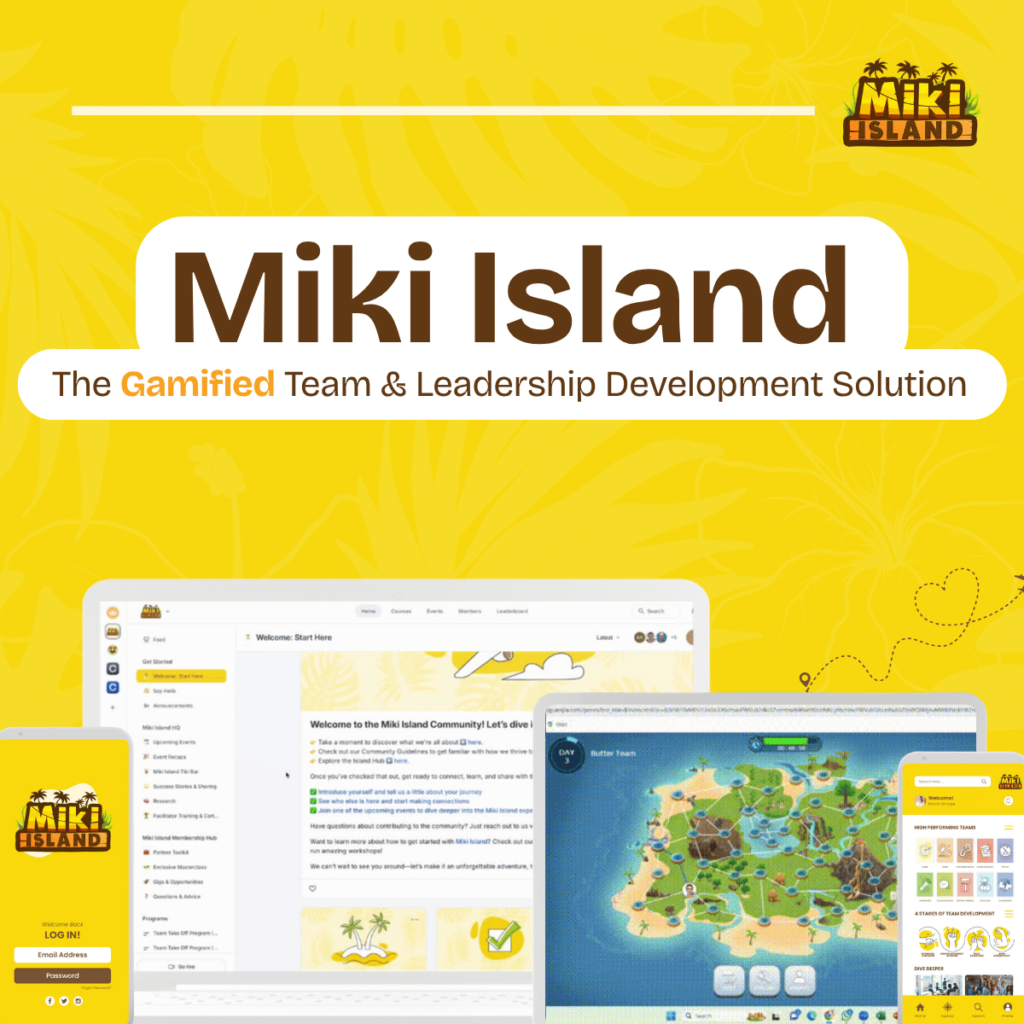
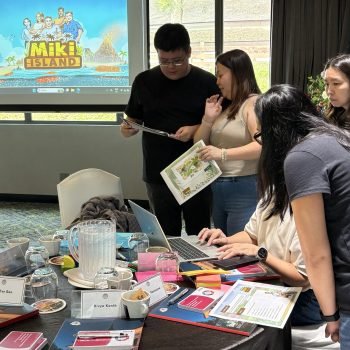
Miki Island is a simulation played by teams. As the game develops, communication, resource allocation and decision-making unfold under pressure, and the way a group handles them becomes visible to everyone in the room, including the facilitator.
More than 300,000 people across 35+ countries have played it.
Participants were deliberately placed into mixed groups, working alongside colleagues from outside their own business line.
Only one of the three groups made it off the island.
The other two didn’t survive the journey — though one came within a step or two of the marine base.
The Impact 🚀
- The simulation surfaced how a shared, clearly understood goal allowed a team to move through differences without getting stuck in them.
- It also surfaced the tension between distinct roles and effective collaboration — and how open, curious communication was what resolved it.
- The second part of the session moved into psychological safety, trust and emotional intelligence, giving teams the tools to apply what the game made visible.
What the Simulation Made Visible 💡
When asked what happened under pressure, the surviving group had a simple answer: they had differences, but the goal was clear enough that those differences didn’t get in the way.
The second reflection was about roles — at times it felt like everyone was too boxed in, but what helped was being curious about what each person actually needed to do. That made it easier to move forward together.
That’s the thing about a simulation. It doesn’t just tell you how a team works — it shows you the moment when it nearly doesn’t, and what pulled it back
Dialogue in Practice 🎭
The second part of the workshop moved into content on psychological safety, hostage-taking, trust and emotional intelligence.
This was anchored by a live scene: a team member becoming psychologically hostage to a difficult client, and that state filtering through the team to erode safety and collaboration.
Participants then moved into a dialogue lab, where three groups rehearsed real-life, future conversations alongside an actor-coach using the C4 Dialogue Navigator®.
It was the first time Miki Island had been combined with the C4 Dialogue Navigator® in a single programme.
Conclusion
- Two teams didn’t make it off the island. The third did — because the goal was clear enough that their differences didn’t get in the way. That same clarity is what the dialogue lab was built to protect. For a firm whose three business lines serve the same clients, that’s not a nice-to-have. It’s the whole point.
