
Starting Strategy Conversations a Different Way
Strategy workshops tend to start with presentations, frameworks, and long discussions.
But one Singapore government ministry chose to start differently.
As their HROD team came together for a strategy workshop to align on the year ahead, they wanted an opening that would do two practical things:
- Create team bonding and connection, especially across different roles and working styles 🤝.
- Set the tone and mindset for productive conversations about future priorities 🎯.
To achieve that, they partnered with Miki Island for a short, facilitated simulation experience – not to “change behaviour” overnight, but to create a shared experience that would make the rest of the day’s conversations easier, more honest, and more energised.
And that’s exactly what it did.
The Objective: Bonding + Alignment, Not “Training”
The ministry’s HROD team was preparing to discuss strategic priorities, guided by four focus areas:
- Ways of Working
- Evolving Capabilities
- Collaboration
- Enhancing HR’s impact across the organisation
The team didn’t need another lecture on collaboration or culture.
They wanted something that could bring people together quickly – and create a common reference point before the deeper planning began.
In a short format, Miki Island was used as a “catalyst” experience:
✨ Light enough to be engaging
🔍 Structured enough to surface real dynamics
🎯 Purposeful enough to support the follow-on strategy discussion
What We Noticed During Gameplay
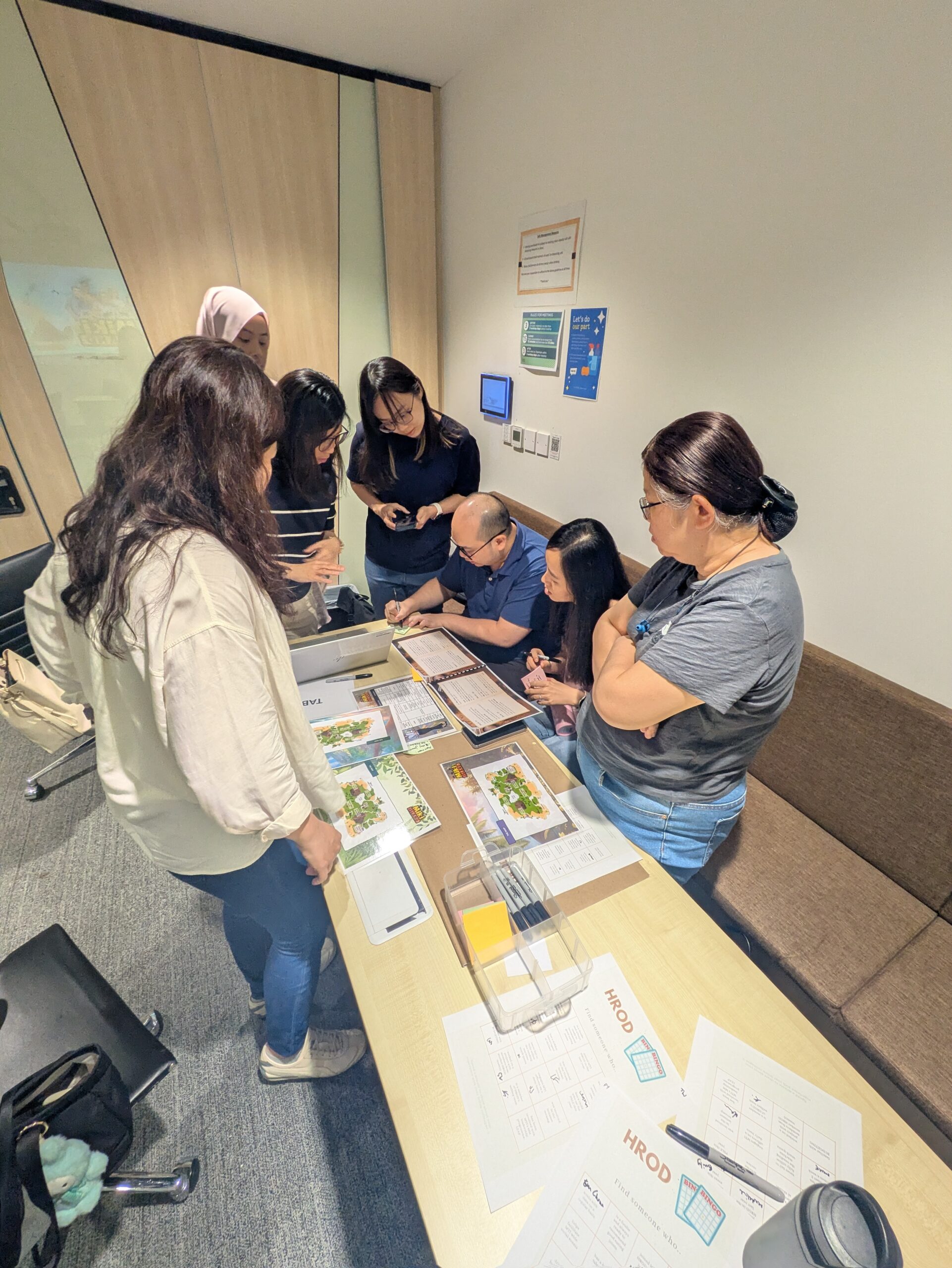
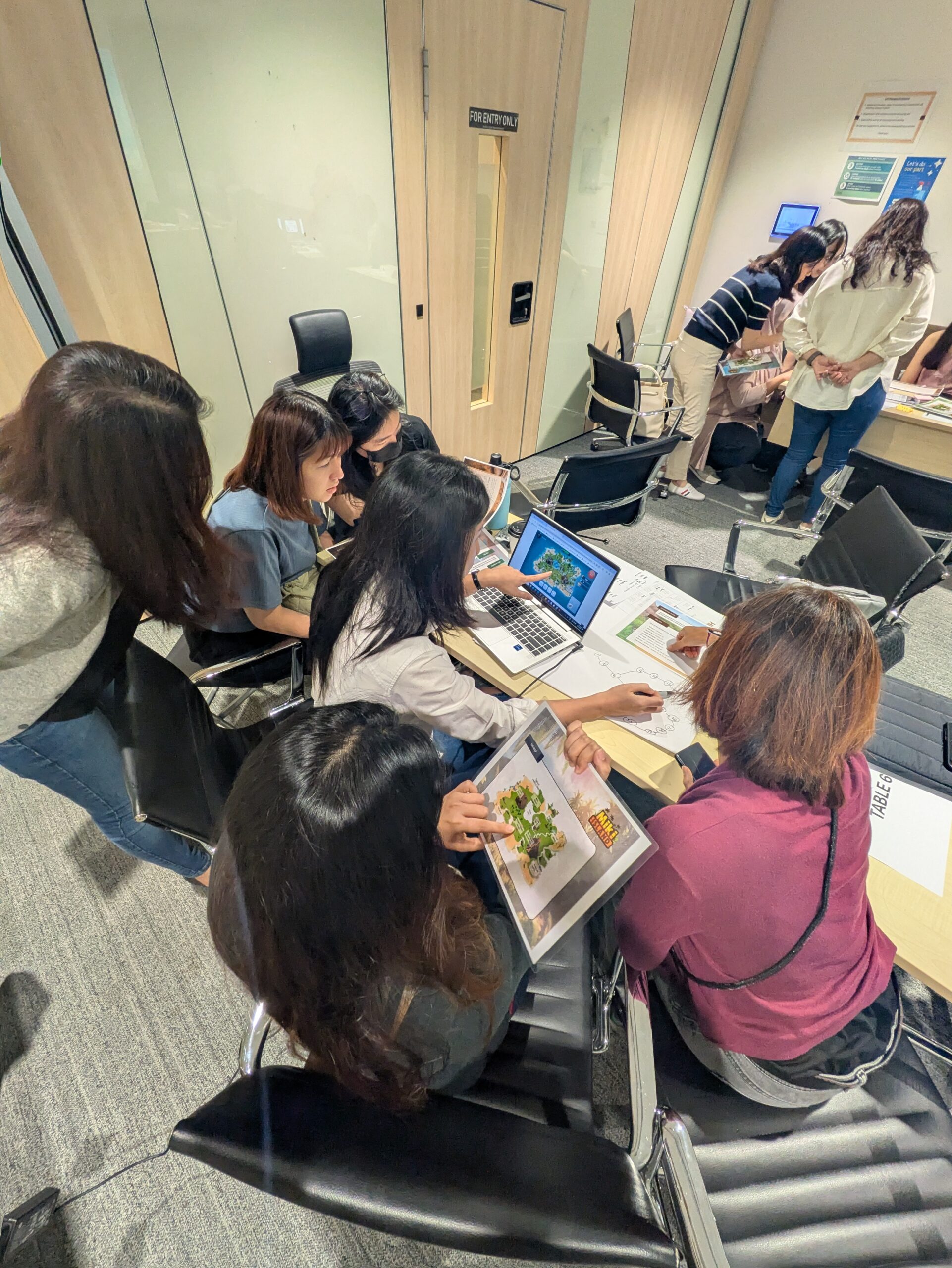
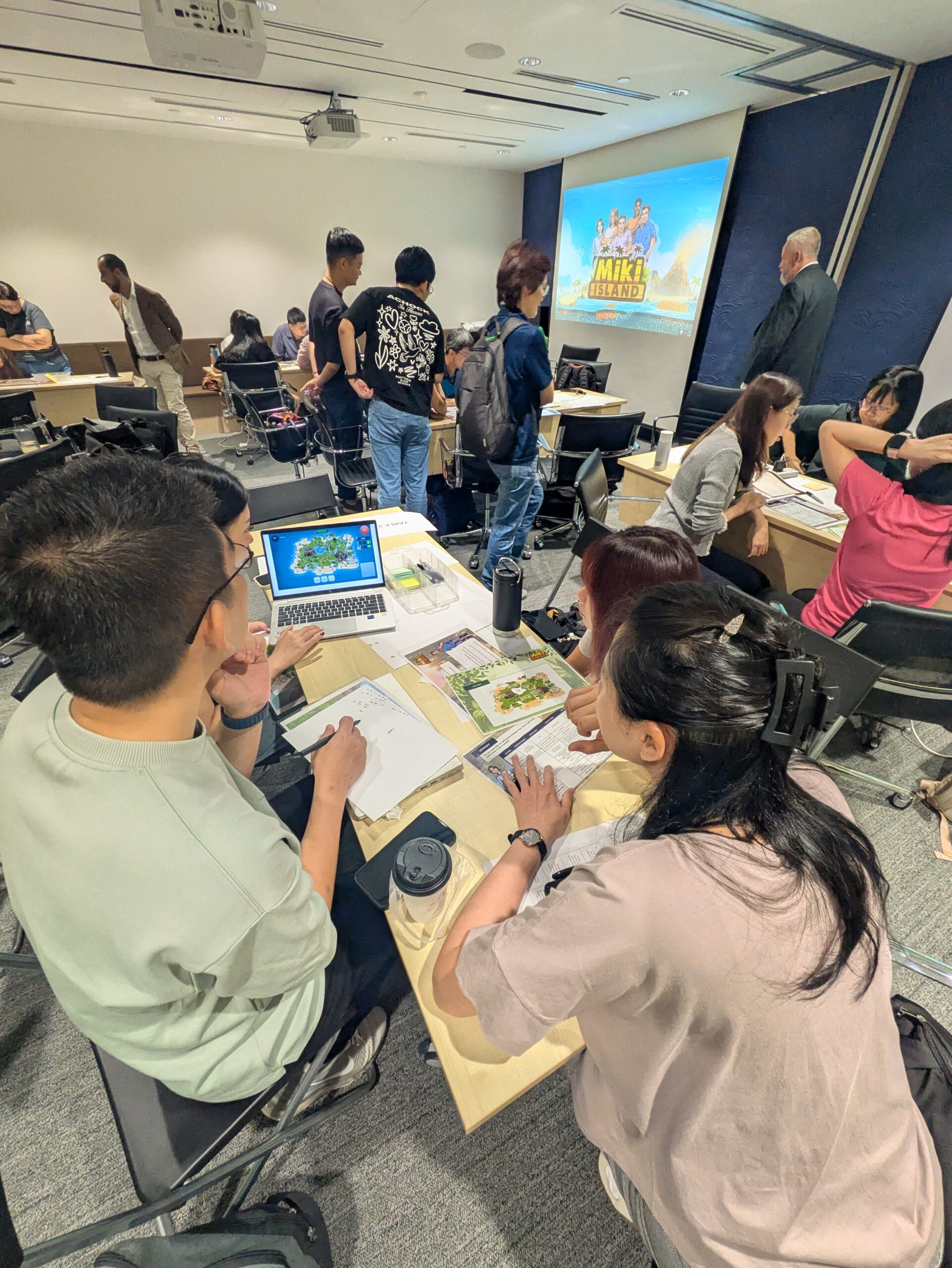
The simulation was run as a facilitated gameplay experience, followed by a short customised debrief.
Like many team-based experiences, it brought out familiar workplace behaviours – but in a way that felt safe, observable, and easy to reflect on 🧠.
One interesting thing we noticed was how a couple of teams naturally leaned into collaboration, rather than treating the session as purely competitive.
Instead of focusing only on “winning”, they:
🤝 Exchanged information across groups
🙌 Helped others succeed
🔄 Adapted roles and strategies on the fly
🏝️ Prioritised the overall outcome over individual team performance
It’s not the default behaviour you always see in workshops – and that’s precisely what made it meaningful.
Simulations don’t just create discussion.
They create conditions where real instincts and working patterns surface naturally, without needing to force it.
From Simulation to Workplace: A Short but Meaningful Debrief
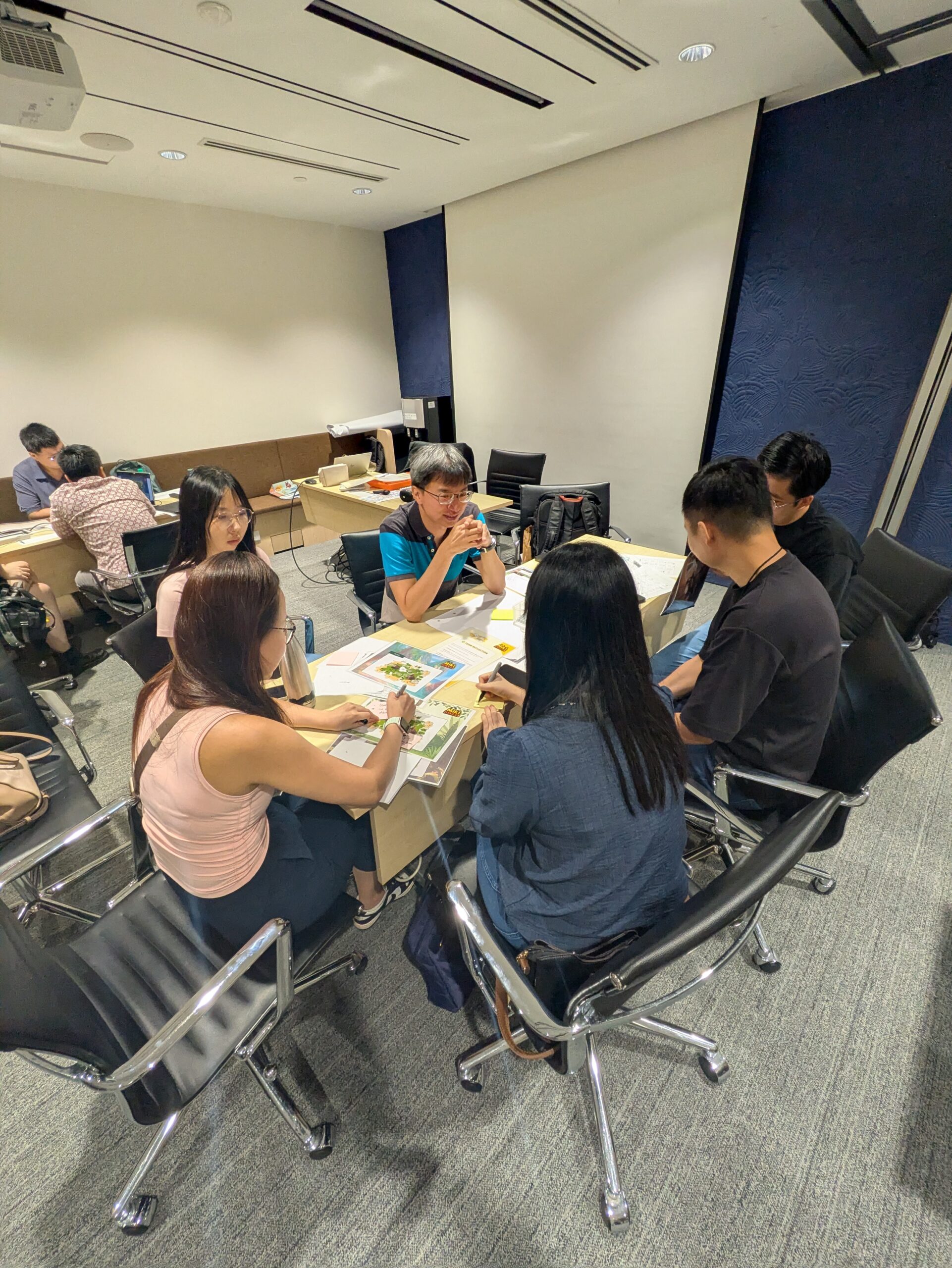
After the gameplay, we facilitated a short customised debrief to help participants translate what happened in the experience back to their day-to-day realities.
The intention wasn’t to over-analyse.
It was simply to help the team pause and reflect on questions such as:
- When did we collaborate well – and what enabled that?
- Where did we default into silos or assumptions?
- What behaviours helped us adapt quickly?
- What patterns do we want more of, as we work together this year?
This helped put everyone in the right mindset for the next segment of the workshop: the conversation around strategic priorities.
What the Team Shared After the Session
“Working with Aeqlia has been an excellent experience from start to finish. Their professionalism was evident at every stage of the process – from the initial scoping discussions to the delivery of the training sessions. The team was consistently well‑prepared, responsive, and attentive to our needs, ensuring that the program was tailored to our objectives.
Ouss’ and Perlyn’s willingness to go the extra mile, whether in clarifying details or adjusting to last‑minute requests, gave us confidence that we were in capable hands.
Beyond their professionalism, Aeqlia brought deep subject‑matter expertise that enriched the entire experience. Together with Michael Jenkins, they brought their knowledge and applied them in ways that were both engaging and impactful for our participants. Their ability to connect theory with practical application helped our teams gain valuable insights while keeping the sessions dynamic and interactive.
Overall, Aeqlia proved to be a trusted partner who not only delivered results but also made the journey collaborative and rewarding.”
Alycia Lum and Michelle Li – HROD project liaisons
Why This 90 Minutes Mattered
This was only a 90-minute session – and it wasn’t designed to “fix” team dynamics in a single morning.
But it did what the ministry set out to do:
Create connection, surface useful behaviours, and establish a shared starting point for meaningful strategic conversations.
Sometimes, that’s exactly what a strategy workshop needs – not more content, but the right conditions for teams to think, reflect, and move forward together.
If this approach to starting strategy conversations resonates with you, we’d love to explore how a shared simulation experience could support your team’s next workshop.
