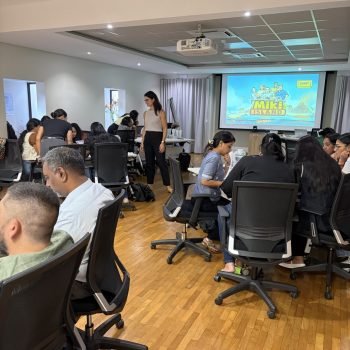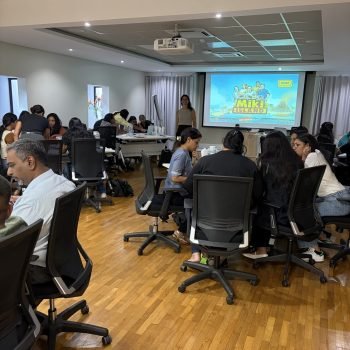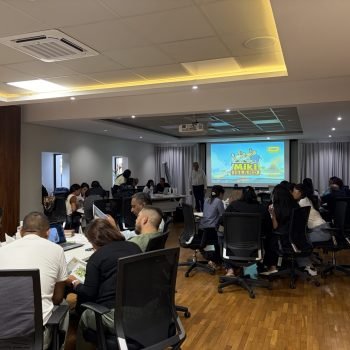
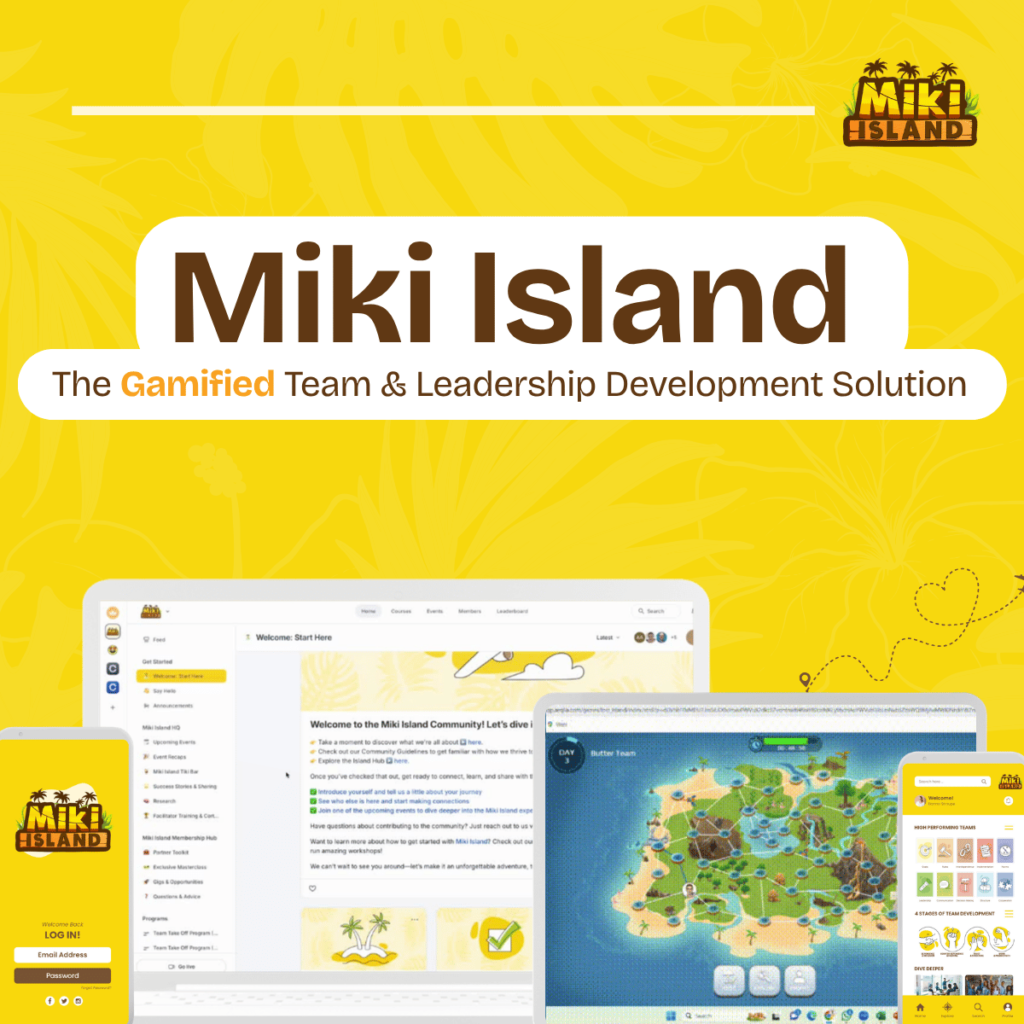
Location: Mauritius Island
Topic: One HR Team: Breaking down silos
Partner: Patricia Louvet, Team Consultant, Innovara
One HR Team 🌱
Behind every organisation’s transformation is a team of people trying to hold it together. In this case, that team was HR itself — 22 professionals spread across a corporate centre and five operational entities, part of a market-leading Mauritian construction group with over 1,500 employees and a company actively reshaping itself from the inside out.
The challenge wasn’t performance. It was connection. And closing that gap was exactly what this one-day experience was designed to do.
A Function Divided by Design 🔄
The context was honest and familiar to anyone who has worked inside a decentralised organisation.
Corporate HR and entity HR teams were each doing their jobs — but largely in parallel. Communication flowed well within the corporate team, less so between corporate and the local entities. HR Managers in the field operated with high autonomy, often without meaningful coordination with the centre. Practices had fragmented. Visibility had reduced. And beneath the operational surface, there were signs of something harder to measure: fatigue, some demotivation, and a creeping sense of disconnection from shared purpose.
Several mechanisms had been introduced — quarterly reviews, one-to-ones, even a performance weighting on group collaboration. But mechanisms alone don’t build a community. Something more human was needed.
Patricia Louvet and Inovara: Designing for Cohesion 🤝
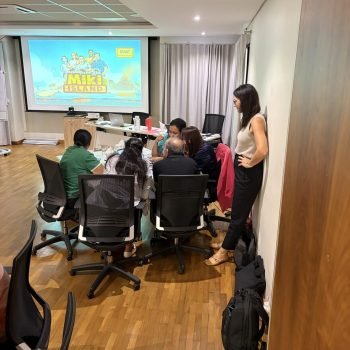
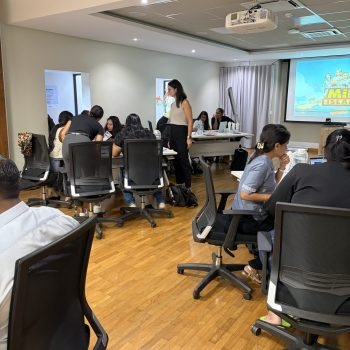
The experience was designed and facilitated by Patricia Louvet of Inovara, a certified Miki Island partner whose work focuses on organisational development and team transformation.
Patricia brought both the Miki Island simulation and a carefully constructed program architecture to the day — creating a space where the real dynamics of the group could surface naturally, be examined honestly, and be redirected toward something new.
The design was deliberately lean: one day, high impact, no room for anything that didn’t serve the core intention of building a genuine “One HR Team” identity.
What the Simulation Surfaced 🏝️
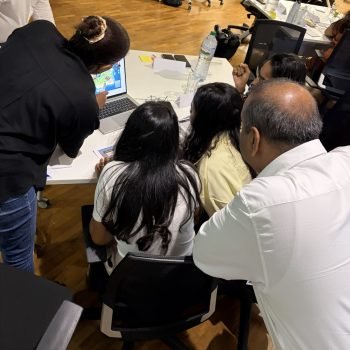
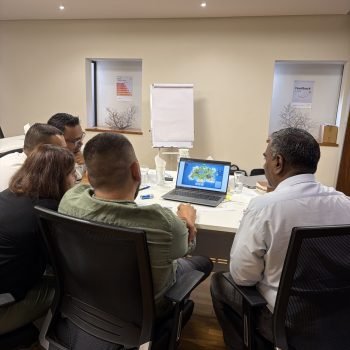
Inside Miki Island, the group’s real patterns became visible almost immediately — and they recognised them.
The same dynamics that played out in the simulation were the ones they navigated every day: silos forming under pressure, communication gaps appearing at the exact moments coordination mattered most, dominant voices carrying decisions while others held back, uncertainty about roles creating hesitation rather than action.
For newer team members — still establishing themselves, careful about asking for help — the simulation offered something important: a low-stakes environment to participate fully, contribute visibly, and be seen without the credibility risk that sometimes silences people in real organisational settings.
For longer-tenured members, it offered a different kind of mirror: a chance to notice how their confidence and expertise landed on the team, and whether it opened space or inadvertently closed it.
What emerged across both groups:
🤝 How trust — or its absence — shapes the speed and quality of coordination
🧠 How information flows (or doesn’t) when people operate in their own lanes
🔄 How much is assumed versus genuinely shared when working toward a common goal
🎯 What alignment actually feels like when it’s present — and what its absence costs